Best Travel Tech Accessories 2026: The Gadgets Worth Packing
The travel tech that actually earns its place in your bag, from a 10,000mAh power bank that fits in your pocket to the one cable everyone forgets until they're stuck at the gate.
Here at TripLab, we've learned most tech mistakes the hard way. After years of over-packing gadgets and then stripping back to essentials, we've landed on a short list that genuinely earns its weight. One of our team landed in Tokyo after a 14-hour flight with 3% battery and no power bank - the one packed had died months earlier and never got replaced. The first stop after clearing customs wasn't ramen or a train. It was paying 3,800 yen (about $26) for a basic USB charger at a vending machine, then sitting on the floor of Narita Airport next to a single charging port for 45 minutes. The express train was missed.
No gimmicks, no overpriced gadgets with one-star durability, no "smart" accessories that need their own app to work. Just the things we actually use every time we leave the country: a compact power bank, noise-canceling headphones or earbuds depending on the trip, and a universal adapter that doesn't cost $40 at an airport kiosk. Here's what we've tested, what we've ditched, and what's in the bag right now.
⚡ Quick Picks: Best Travel Tech 2026
- Best Overall Anker PowerCore 10000 ($26) - Pocket-sized, 10,000mAh, charges most phones twice. No excuses.
- Best Headphones Sony WH-1000XM5 ($348) - 30-hour ANC, best-in-class noise cancellation for long-haul flights.
- Best Earbuds Sony WF-1000XM5 ($228) - 8-hour battery plus charging case, compact enough for any bag.
- Best Adapter Paewok Universal Travel Adapter ($20) - 150+ countries, 4 USB ports, fits in a palm.
- Best Budget Anker Soundcore Q45 ($60) - Solid ANC headphones for travelers who won't spend $300+ on audio.
Full Reviews
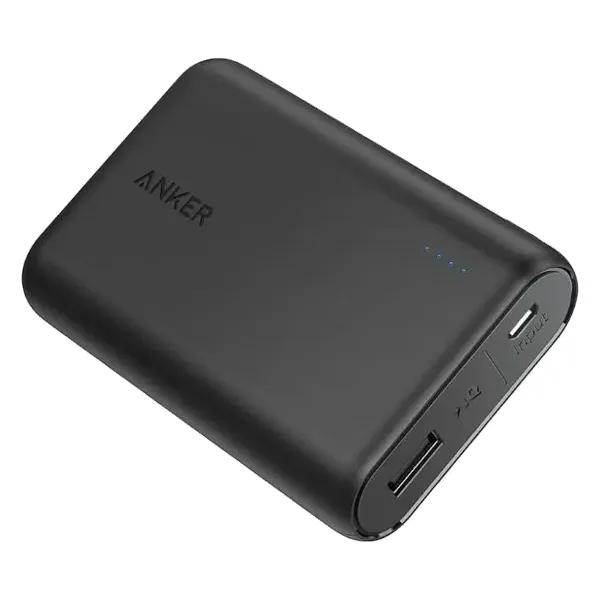
Anker PowerCore 10000
This is the one that should have been in the bag in Tokyo. At 10,000mAh, the Anker PowerCore 10000 will fully charge most smartphones twice over. What sets it apart from cheaper options is the form factor: it's roughly the size of a thick smartphone, weighs under 200g, and slides into a jeans pocket without bulk. We've had ours for two years and it still holds a full charge. At $26, it's cheaper than a single charge from an airport kiosk machine.
- + 10,000mAh charges most phones 2-3 times
- + Fits in a pants pocket or the front pouch of any daypack
- + USB-A and USB-C ports, works with virtually any device
- + TSA-friendly, well under the 100Wh carry-on limit
- - No 65W PD fast-charging, so slower for laptops
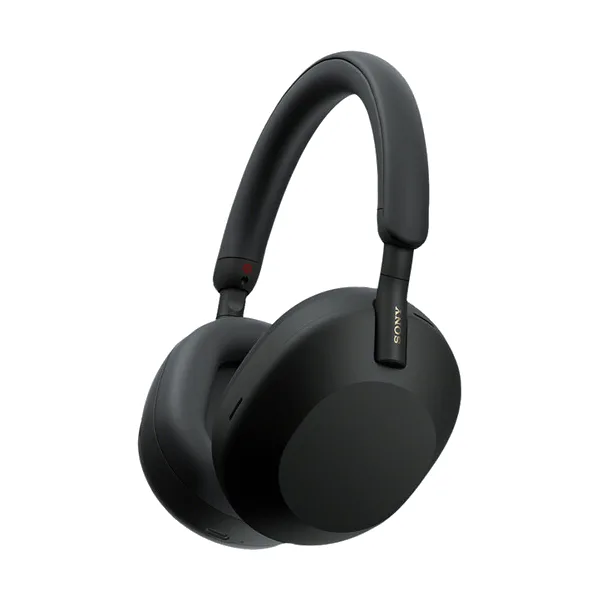
Sony WH-1000XM5
We won't pretend $348 is casual spending for most people. But if you regularly sit in economy for 8-12 hours, the Sony WH-1000XM5 is the single most impactful piece of travel gear you can own. The ANC is genuinely exceptional: engine roar, crying babies, announcements over the intercom all drop to a manageable hum. At 30 hours of battery life with ANC on, they'll outlast two back-to-back long-haul flights. The ear cups fold flat (though the XM5 doesn't fold as compactly as the XM4 did, which is a real tradeoff). For frequent flyers, this is the premium tier that's actually worth it.
- + Best-in-class active noise cancellation
- + 30-hour battery with ANC enabled
- + Excellent call quality with multipoint Bluetooth
- + Comfortable for multi-hour wear
- - Doesn't fold as compactly as its predecessor
- - $348 is hard to swallow if you fly twice a year
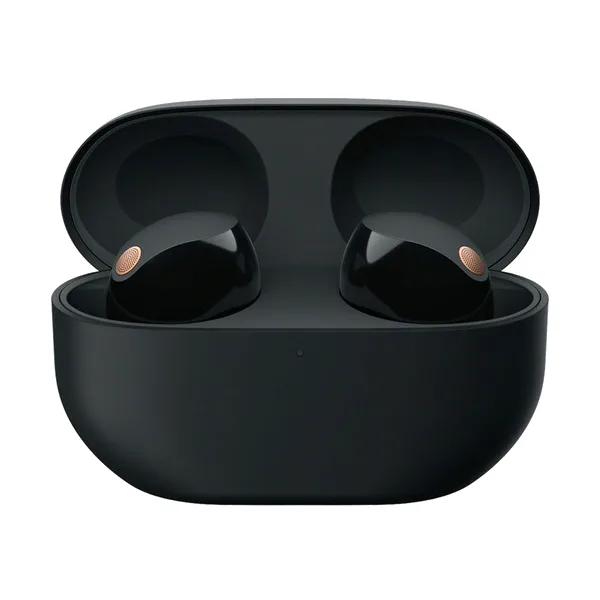
Sony WF-1000XM5
The case for earbuds over over-ear headphones: they weigh almost nothing, take up almost no space, and you can sleep in them without your head tilting sideways off a cramped economy seat. The Sony WF-1000XM5 are the best wireless earbuds we've tested specifically for travel, with ANC that punches well above their size. You get 8 hours per charge from the buds themselves, plus another 16 hours from the compact charging case. That's enough for a transatlantic flight with headroom to spare. The fit is more comfortable and the case is noticeably smaller than the XM4 generation.
- + 8 hours per charge, 24 hours total with the case
- + Compact case fits in any pocket or bag
- + Strong ANC for the earbud category
- + Comfortable enough for sleeping on planes
- - ANC still trails the over-ear WH-1000XM5 on loud flights
- - $228 is still premium territory
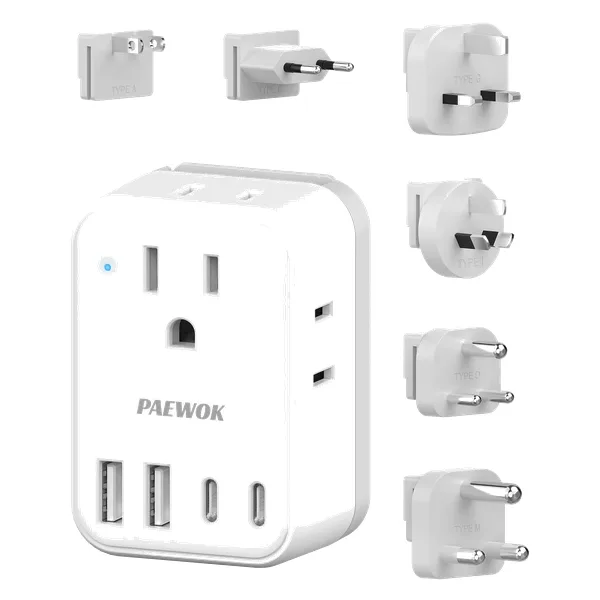
Paewok Universal Travel Adapter
The Paewok Universal Travel Adapter is the answer to airport adapter kiosks charging $35 for a piece of plastic. At $20, it handles Type A (US), Type C (EU), Type G (UK), and Type I (Australia/NZ) plugs, covering well over 150 countries. The four USB ports mean you can charge your phone, earbuds, and a partner's device simultaneously from a single outlet, which matters when hotel rooms have exactly one accessible socket in a sensible location. One important note: this adapter changes plug shape, not voltage. Make sure your devices support 100-240V input (most modern electronics do, but verify your hairdryer or electric shaver before you plug it in).
- + Works in 150+ countries with one adapter
- + 4 USB ports plus one AC outlet slot
- + Compact, light, and easy to pack
- + $20 beats any airport kiosk price
- - Adapter only, not a voltage converter
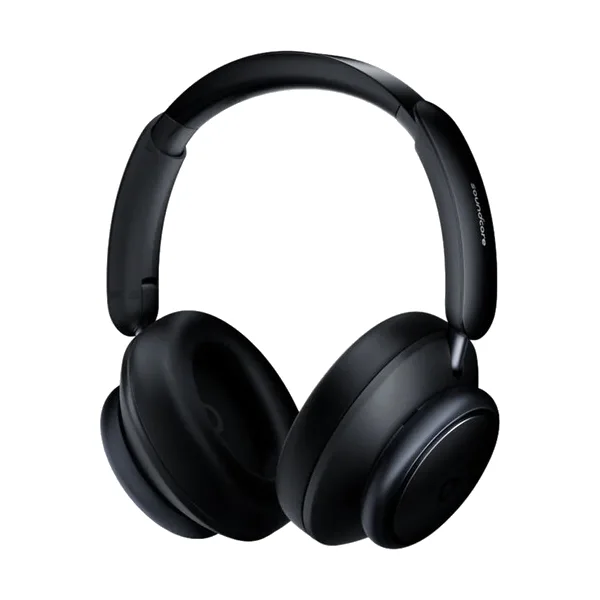
Anker Soundcore Q45
Not everyone needs to spend $348 on headphones, and we'd rather say that plainly than just recommend the most expensive option. The Anker Soundcore Q45 costs $60 and delivers real, functional ANC that will genuinely reduce cabin noise on a flight. It won't match the Sony XM5 in raw noise cancellation depth or sound quality, but for an occasional traveler or someone who can't justify a $300 headphone purchase, it's the right call. The battery life is strong, the fold-flat design packs easily, and the build quality is solid for the price point. Think of it as 70% of the Sony experience at 17% of the cost.
- + Real ANC at a budget-friendly $60 price point
- + Strong battery life for the category
- + Folds flat for easy packing
- + Great value for occasional travelers
- - ANC noticeably weaker than the Sony XM5
- - Sound quality is good but not audiophile-grade
⚠ What We Don't Pack Anymore
Three categories of travel tech we've tried, used, and stopped carrying:
-
✕
Smart luggage trackers (Apple AirTag style). We tried it for a year. The honest truth: they're useful when your bag actually gets lost, but that's rare if you carry on. And if you check a bag, the AirTag just tells you where your missing bag is, it doesn't get it back faster. The anxiety of watching a blinking dot travel to a different city is worse than not knowing.
-
✕
Heavy multi-port charging bricks. The 65W, 4-port GaN bricks that weigh nearly a pound. We swapped ours for the Paewok adapter plus individual fast chargers for each device. Lighter, more flexible, and doesn't leave us without charging if one port stops working.
-
✕
Travel laptop stands. They look great on Instagram. In practice, we've never once set one up in a hotel room when you could just stack a few books or use the room's desk at its natural height. Dead weight every trip.
💡 The Cable Everyone Forgets
USB-C to USB-C. That's it. We can't count the number of times we've watched someone at a gate borrow a cable or walk to the kiosk to buy one because their phone died and their cable is somewhere in their checked bag.
Keep one dedicated 3-foot USB-C to USB-C cable in your travel bag and never move it. Not a hand-me-down from an old phone, not the one you grab from your desk when packing. A cable that lives in your travel kit permanently. Get one rated for at least 60W charging so it works with your laptop in a pinch. Buy a second one to throw in your personal item.
It costs under $10. It has saved our boarding passes more times than any smart luggage tag or travel pillow ever has.
Budget vs. Premium: When Is It Worth Paying More?
The most common question we get is whether the Sony WH-1000XM5 at $348 is worth nearly 6x the price of the Anker Soundcore Q45 at $60. Here's our honest take:
Best for occasional travelers (1-4 trips per year). The ANC works, the battery is solid, and you won't be devastated if it gets scratched in your bag or left on a plane.
- + Great value, real ANC
- + Low financial risk
- + Folds flat, easy to pack
- - ANC less powerful in loud cabins
- - Less refined sound and feel
Best for frequent flyers (monthly or more). The ANC is genuinely different on a 10-hour flight: you arrive less fatigued, and the 30-hour battery means no anxiety about dying mid-flight.
- + Best-in-class ANC
- + 30-hour battery, outlasts any flight
- + Noticeably better sound quality
- - $348 is real money
- - Less compact than XM4 generation
Our rule: if you fly long-haul more than 4-5 times a year, the Sony pays for itself in quality of life within a few trips. If you travel a few times a year for shorter flights, the Anker Q45 is genuinely excellent and the $288 difference buys a nice dinner at your destination. Neither pick is wrong. It just depends on how much time you spend in an airplane seat.
Frequently Asked Questions
What is the best compact power bank for travel in 2026?
The Anker PowerCore 10000 is the best compact travel power bank in 2026. It holds 10,000mAh, fits in a pants pocket, weighs about 6 oz, and costs around $26. It charges most phones 2-3 times and handles both USB-C and USB-A devices without needing an adapter.
Are Sony WH-1000XM5 headphones worth the price for travel?
If you fly frequently, yes. The Sony WH-1000XM5 offers best-in-class active noise cancellation, 30 hours of battery life, and a comfortable fit for long hauls. At around $348 they're an investment, but the difference in a noisy cabin is substantial. Budget travelers should consider the Anker Soundcore Q45 at $60 instead.
Can I bring a 10,000mAh power bank on a plane?
Yes. Power banks up to 100Wh (approximately 27,000mAh at 3.7V) are allowed in carry-on luggage by the TSA and most international aviation authorities. The Anker PowerCore 10000 is well within this limit. Power banks must go in carry-on luggage, never checked baggage.
Do universal travel adapters actually work everywhere?
Most quality adapters cover Type A, B, C, G, and I plugs, handling the US, Europe, UK, and Australia. The Paewok Universal Travel Adapter covers 150+ countries and includes 4 USB ports. One critical note: adapters change plug shape only, not voltage. Verify your devices support 100-240V input before plugging anything in overseas.
What is the best USB-C cable to keep in a travel bag?
A USB-C to USB-C cable rated for at least 60W charging and supporting USB 3.2 for data speeds. Keep a dedicated 3-foot cable in your travel kit permanently so you never dig through your home setup at 5 AM. Buy a second one as a backup. A good braided cable costs under $10 and will outlast most of the expensive gadgets in your bag.
Related Articles
Long-Haul Flight Essentials 2026
Everything worth packing for a 10+ hour flight, ranked by how much they actually help.
Gear ReviewBest Noise-Canceling Headphones for Travel
A deep dive on ANC headphones tested across real flights and transit noise.
Gear ReviewBest Power Banks for Travel
From pocket-sized to high-capacity: which power bank actually fits your travel style.
Practical GuideTravel Adapter Guide: What You Actually Need
Adapter vs. converter, plug types by region, and how to avoid frying your devices abroad.