Long-Haul Flight Essentials 2026: The 10 Products Worth Packing
Updated May 1, 2026 • 8 min read
Here at TripLab, we've logged thousands of hours on long-haul flights - transatlantic, transpacific, and everything in between. Over years of testing gear, we've narrowed down what actually makes a difference. On a recent JFK–Tokyo run, one traveler wrestled with a crumbling foam neck pillow for 14 hours straight - propping it, repositioning it, eventually giving up and spending most of the flight hunched against the window. Right next to them, a TripLab tester had a Cabeau Evolution S3 clipped behind their neck, Sony WH-1000XM5 on, and slept for about four solid hours somewhere over the Pacific. Not perfect sleep. But four hours on a metal tube at 35,000 feet is not nothing.
After 40+ long-haul flights collectively, we have a very short list of things that genuinely change the experience and a longer list of things we wasted money on. This article is the honest version of both. Every product below has been used by our team across routes like Sydney (17 hours), Johannesburg (15 hours), and Tokyo (14 hours). The prices are current as of early 2026. The links are affiliate links, which means we earn a small commission if you buy, at no cost to you.
Quick Picks: Top 5 Essentials
-
1
Sony WH-1000XM5 Headphones - ~$348 - Best noise cancellation available, 30-hour battery, comfortable over 14+ hours
-
2
Cabeau Evolution S3 Pillow - ~$50 - Memory foam, holds your head up, the best standard travel pillow we've tested
-
3
Sockwell Compression Socks - ~$30 - Merino wool, genuine DVT protection, warm and not miserable to wear
-
4
Anker PowerCore 10000 - ~$26 - Slim and pocketable, about 2.5 iPhone charges
-
5
TRTL Pillow - ~$60 - Scarf-style with rigid support, the choice if you sleep fully upright
The 10 Essentials
1. Noise-Canceling Headphones: Sony WH-1000XM5
This is the single item we would never board a long-haul flight without. The constant drone of aircraft engines is exhausting in a way that most people don't recognize until it stops. On a Sydney flight (17 hours total), our testers wore these for about 12 of them. The noise cancellation is genuinely in a different league from most competitors. Sony's WH-1000XM5 uses eight microphones and dual noise sensor technology to eliminate the low-frequency rumble of jet engines better than anything else we've tried. The 30-hour battery means you won't be hunting for the charging cable somewhere over the Indian Ocean. And the earcups are soft enough to wear for hours without the pressure headache that tighter headphones cause.
Even when not sleeping, having these on with a podcast or movie changes the experience completely. The cabin feels quieter and smaller in the best way. At ~$348, it's the most expensive item on this list but also the one with the most obvious, immediate payoff.
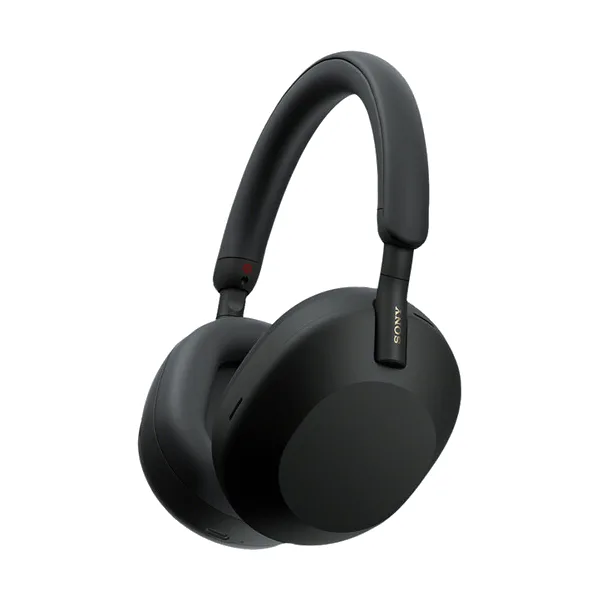
Sony WH-1000XM5
Noise-Canceling Headphones
- 30-hour battery life
- Industry-leading noise cancellation
- Comfortable for 10+ hour wear
- Multi-device Bluetooth pairing
2. Travel Pillow: Cabeau Evolution S3 vs. TRTL Pillow
Travel pillows are one of the most personally variable pieces of gear on this list. How you sleep determines which one works for you. We've used both of these on long-hauls, and they solve different problems.
The Cabeau Evolution S3 (~$50) is a traditional U-shape pillow but built with memory foam and a clasp that cinches it around the front of your neck to stop your chin from dropping. This is the one we use most often. It's a significant step above cheap horseshoe pillows because the foam actually holds its shape and the front lobe keeps your head from sliding forward mid-sleep. If you can lean your head to the side or slightly forward, this works very well.
The TRTL Pillow (~$60) is a completely different design. It looks like a scarf but has a rigid internal plastic support that tucks against the side of your neck when you wrap it. It's more compact than any foam pillow, which matters when you're already fighting for overhead space. The TRTL is the better choice if you tend to sleep with your head straight up or leaning hard to one side, because the internal rib gives firm, targeted support where you need it.
Our advice: try the Cabeau first. If you consistently wake up with your head lolling to the side unsupported, get the TRTL instead.
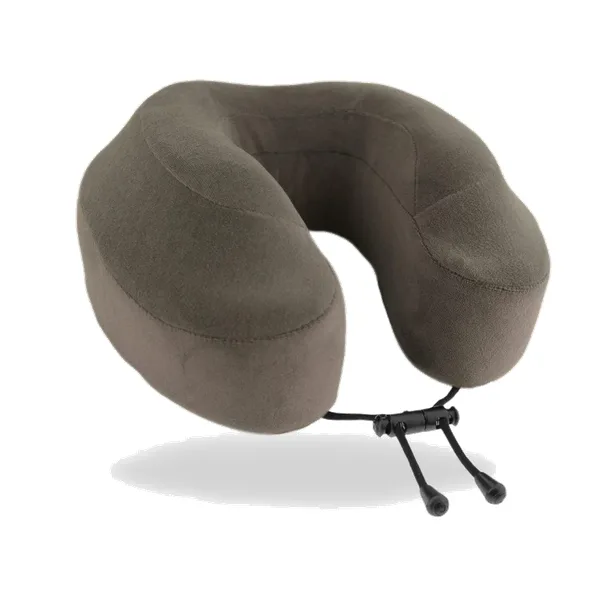
Cabeau Evolution S3 Pillow
Memory Foam Travel Pillow
- Front-clasp keeps chin from dropping
- Full memory foam construction
- Compresses into small carry bag
- Machine washable cover
3. Compression Socks: Sockwell
Compression socks are not optional past the 8-hour mark. Sitting immobile in a narrow seat for 14+ hours significantly reduces blood flow in your lower legs, and deep vein thrombosis is a real risk, not a hypochondriac's concern. Compression socks work by applying graduated pressure that keeps blood from pooling in your feet and calves. The Sockwell compression socks (~$30) are our pick because they're made from merino wool, which means they're actually comfortable to wear for a full day. They regulate temperature, don't smell after long wear, and don't feel like you're wearing a blood pressure cuff on your leg. We put these on before boarding every long-haul flight.
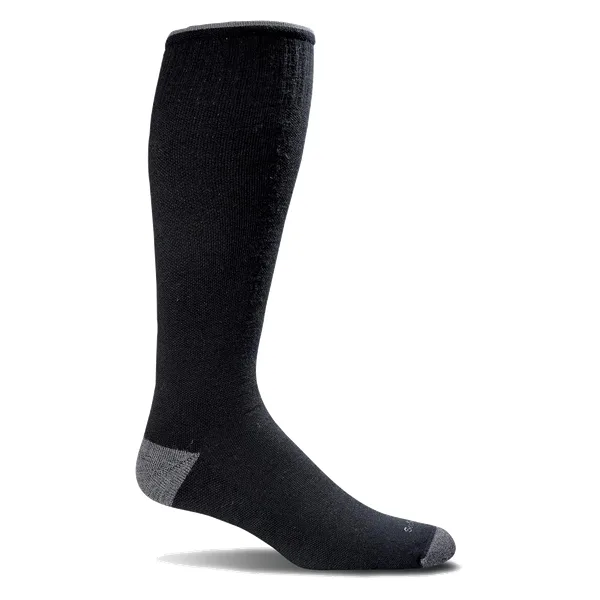
Sockwell Compression Socks
Merino Wool Graduated Compression
- Genuine DVT risk reduction
- Merino wool: warm, odor-resistant
- Graduated compression for comfort
- Multiple styles and colors
4. Power Bank: Anker PowerCore 10000
Not every seat has a working USB port. We've hit dead outlets more times than we can count on both international and domestic legs. The Anker PowerCore 10000 (~$26) is the smallest, lightest power bank we've found that still delivers meaningful capacity. It fits in a jacket pocket, weighs almost nothing, and gives you about 2.5 full iPhone charges. On a 14-hour flight, that's the difference between landing with a full phone and landing with a dead one.
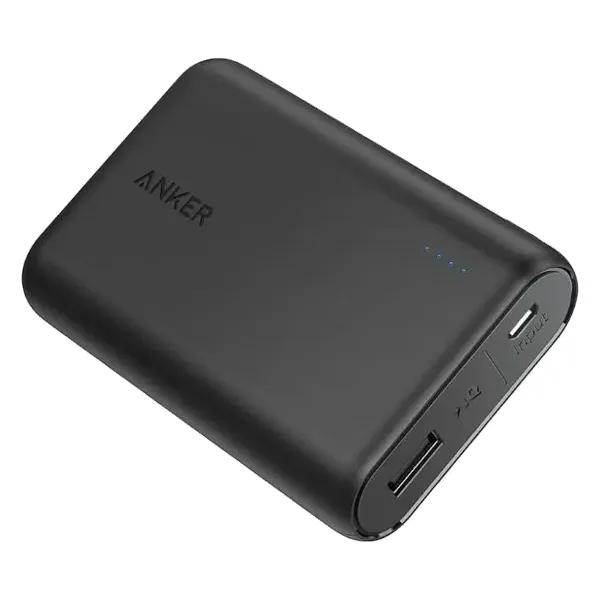
Anker PowerCore 10000
Compact Portable Charger
- 10,000mAh (~2.5x iPhone charge)
- Fits in a jacket pocket
- Airline-safe (37Wh, well under 100Wh limit)
- High-speed charging output
5. Travel Adapter: Paewok Universal
If your long-haul flight is going anywhere international, you need a travel adapter for the other end. We keep the Paewok universal adapter (~$20) in the bag permanently. It covers 150+ countries, has four USB-A ports plus a USB-C port, and the prongs swap quickly without feeling flimsy. We've used it in Japan, South Africa, the UK, and Australia without any issues. At $20 it's one of the best value items on this list, and not having one means hunting down a desk adapter at whatever hotel you land in at midnight after a 15-hour flight.
6. Compression Packing Cubes: Eagle Creek Specter
For trips longer than a week where you're checking a bag, Eagle Creek Specter compression cubes (~$59) are worth the investment. They compress clothes to roughly half volume using a double-zip system. We use these on any trip over 10 days where we're trying to avoid checking an extra bag. The Specter fabric is ultralight nylon, so the cubes themselves add almost no weight. For 1-week trips or when going carry-on only, we switch to the BAGAIL set (below) because compression isn't the priority.
7. Toiletry Bag: Gonex Hanging Bag
The airport security line is not the place to discover your toiletry bag leaks. The Gonex hanging toiletry bag (~$20) has a waterproof lining, multiple clear compartments for TSA liquid bag compliance, and a hook that hangs from any towel bar or bathroom hook. After years of using cloth pouches that absorbed every spill, having a bag we can wipe out in 10 seconds is a genuine upgrade. It holds more than it looks like it should, including full-sized items for checked baggage travel.
8. Earbuds for Sleeping: Sony WF-1000XM5
Some people find over-ear headphones too bulky when actually trying to sleep, especially if you sleep against the window or on a pillow. The Sony WF-1000XM5 earbuds (~$228) are the in-ear version of the same noise-canceling technology in the WH-1000XM5. They sit flat against your ear, which means you can lean your head on a pillow without that pressure point issue. The noise cancellation is nearly as good as the over-ears. We bring these as a backup on very long flights, or when we know we'll want to lie down during the main sleep block and swap to the over-ears during waking hours.
9. Packing Cubes for Under-Seat Bag: BAGAIL
What kills most long-haul passengers is having everything they need buried at the bottom of their bag in the overhead bin. BAGAIL packing cubes ($19 for an 8-set) solve this completely. We pack one small cube with everything needed during the flight: snacks, charger, headphone case, compression socks, and a spare layer. It goes under the seat. Everything else goes overhead. The BAGAIL set is the best value packing cubes we've found, and having the full 8-piece set means there's a size for every category.
What We Stopped Packing
Eye masks alone. An eye mask does nothing if the cabin is loud and your mind is racing. Without noise canceling, the sensory overload of airplane noise keeps most people in light sleep regardless of darkness. We still bring an eye mask, but it only works in combination with the WH-1000XM5.
Cheap foam neck pillows. The $8 horseshoe pillow from the airport gift shop is a scam. The foam collapses, it does nothing to support your head from falling forward, and you will wake up with a stiff neck worse than if you had nothing. Spend $50 on the Cabeau once and never touch a foam travel pillow again.
Melatonin and sleep aids. We tried melatonin on flights for years. It works for some people, but we found it either did nothing or left us groggy and disoriented on arrival, which is exactly what you don't want when you're navigating an unfamiliar airport. If you're going to try it, start with 0.5mg, not the 10mg doses most US supplements contain. And never take anything prescription-strength on a flight alone.
The 5-Hour vs. 14-Hour Flight Difference
Most of the gear on this list is not worth thinking about for short-haul flights. On a 5-hour domestic flight, you can tolerate almost anything. You'll be uncomfortable, but you'll survive fine.
Once you cross 7 hours, the math changes. Fatigue compounds, circulation becomes a genuine issue, and the quality of your arrival condition actually matters for your trip. The Sony WH-1000XM5 at $348 feels like a lot until you realize you'll use them on every flight for the next 5 years. The Sockwell compression socks at $30 feel optional until you land in Johannesburg with ankles like balloons.
Our threshold: if the flight is under 5 hours, bring whatever. Between 5 and 7 hours, bring headphones and a pillow. Over 7 hours, use this full list.
Frequently Asked Questions
What are the most important items to pack for a long-haul flight?
Noise-canceling headphones, a quality travel pillow, and compression socks are the three things that make the biggest difference on flights over 7 hours. Everything else is secondary. If you can only buy one thing, make it the Sony WH-1000XM5.
Are compression socks worth it on long-haul flights?
Yes. Compression socks like the Sockwell merino wool option genuinely reduce DVT risk by improving circulation in your lower legs during extended sitting. They also keep your feet warm and comfortable on cold overnight flights.
What's the best travel pillow for long-haul flights?
It depends on how you sleep. The Cabeau Evolution S3 works best if you can lean your head forward or to the side. The TRTL Pillow is better if you sleep fully upright, as it wraps around your neck like a scarf and provides rigid internal support.
Can I bring a power bank on a long-haul flight?
Yes. Lithium battery power banks under 100Wh are allowed in carry-on luggage on most airlines. The Anker PowerCore 10000 is 37Wh, well within limits. Always keep it in your carry-on, never checked baggage.
Do I need a travel adapter for international long-haul flights?
If you're flying internationally and plan to charge devices at your destination, yes. A universal adapter like the Paewok works in 150+ countries and has 4 USB ports so you can charge multiple devices at once.