What to Pack for Japan 2026: Complete Packing List
Updated August 2026 · 10 min read
My first Japan trip I packed like I was going to Europe. Wrong shoes, wrong bag, wrong assumptions about cash. I wore slip-on loafers I'd broken in for Italy. They were fine for cobblestones but the wrong height for the wooden step-up entries at temple gates. I carried a roller bag that became a problem on every bullet train between cities.
Japan rewards people who pack specifically for Japan. The cultural differences that affect what you carry are real and not obvious until you're there. This guide is for people who want to get it right the first time.
⚡ Japan-Specific Essentials at a Glance
- No adapter needed: Japan uses Type A plugs (same as US/Canada). Standard 100V but modern electronics handle it fine.
- Bring cash: Japan is still primarily a cash society. Many restaurants, small shops, and vending machines don't take cards. Bring 30,000-50,000 yen for the first few days.
- Shoes that slip off easily: Temples, some restaurants, and traditional ryokan require shoe removal. Laces are a time cost.
- Small day bag: Luggage lockers are everywhere in Japan. Leave your main bag at the station and explore with a small pack.
- Compact umbrella: Japan has unpredictable rain year-round. The Repel Windproof Umbrella ($24) handles Tokyo typhoon-adjacent weather.
How Japan Is Different From Every Other Trip
Most packing guides are mostly interchangeable. Japan is genuinely different in ways that change what you bring:
| Area | Europe Trip | Japan Trip | Why It Changes What You Pack |
|---|---|---|---|
| Payment | Card-friendly everywhere | Heavily cash-based | Bring a travel wallet that holds coins (100-500 yen coins are essential) |
| Power | Type C/F adapter needed | Type A - same as US | No adapter needed at all. Skip it. |
| Shoes | Comfort for cobblestones | Must slip on/off easily | Lace-up shoes are socially awkward at temples and restaurants |
| Luggage | Wheels work fine | Backpack preferred | Bullet trains have limited luggage space; tight streets and stairs |
| Connectivity | Roaming usually works | eSIM or pocket WiFi needed | US roaming is expensive; eSIM ($15-25) or pocket WiFi rental at airport |
| Weather | Seasonal, predictable | Rain possible any month | Compact umbrella is non-optional year-round |
The Bag Strategy for Japan
Japan has one of the best luggage storage networks in the world. Coin lockers (100-800 yen) are at every train station, major temple area, and tourist district. This changes your bag strategy completely: you don't need to carry your main bag everywhere. You check it at the station and explore with just a daypack.
This means your main travel bag can be slightly larger without being a burden. The mistake is bringing a large roller bag onto the Shinkansen. The bullet train's overhead storage is narrow. There are reserved luggage areas at the ends of cars, but they fill up quickly on popular routes. Soft-sided bags and backpacks compress to fit where roller bags won't.
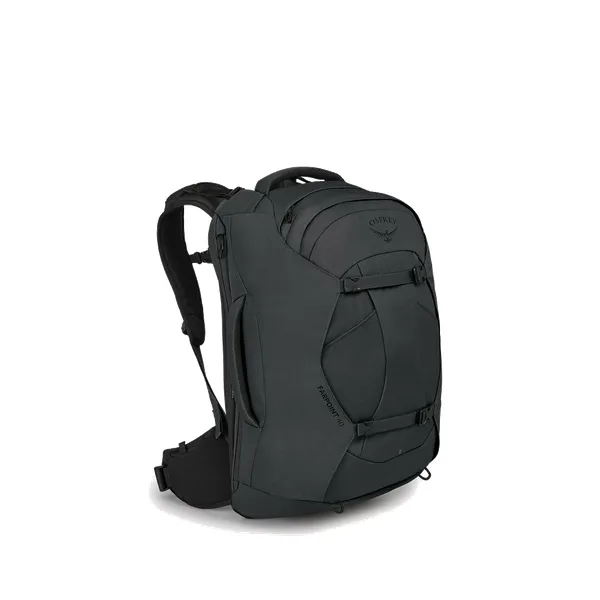
Osprey Farpoint 40 Travel Pack
40L fits a week of clothes and fits overhead on any flight and any Shinkansen rack. The zip-away harness means it doesn't look like hiking gear when you're walking through Kyoto's Gion district. I've used this for three Japan trips. It's the one I keep recommending because nothing about the travel style there fights against it.
The Complete Japan Packing List
👕 Clothing
| Item | How Many | Japan-Specific Note |
|---|---|---|
| T-shirts / tops | 4-5 | Lightweight synthetics or merino - Japan can be humid. Avoid anything too casual for nicer restaurants. |
| Bottoms | 2-3 | One smarter option (for Kyoto kaiseki restaurants, business hotels) |
| Slip-on shoes | 1 pair | Critical. Loafers, low sneakers, or any shoe with no laces. Wear as your primary walking shoe. |
| Clean socks | 5-6 pairs | Critical. Your socks will be seen. Holes or worn-through soles are embarrassing at temples. |
| Light packable jacket | 1 | Train and subway AC is aggressive. You'll want a layer even in summer. |
| Flip flops / sandals | Optional | For onsen (hot springs) or ryokan use. A pair of $10 shower sandals works. |
📱 Electronics
| Item | Essential? | Japan-Specific Note |
|---|---|---|
| eSIM or pocket WiFi | Critical | Get an eSIM before you fly or rent pocket WiFi at the airport. You need maps and translation apps all day. |
| Power bank | Critical | You'll walk 8-15 miles daily using maps and translation. Your phone will die by 3pm without one. |
| Phone charger | Yes | No adapter needed. Japan uses Type A (US standard) at 100V. Modern chargers handle it fine. |
| Travel adapter | Skip it | Japan Type A = US plug. Only exception: shavers with 120V-only ratings. Check your device. |
| Camera | Optional | Japan is extremely photogenic. No camera rules at most outdoor spots; temples vary. |
| Noise-canceling headphones | Optional | For the 14-15 hour flight each way. Worth it on that flight length. |
💸 Money & Documents
| Item | How Much / Type | Japan-Specific Note |
|---|---|---|
| Cash (yen) | 30,000-50,000 yen | Many restaurants, local shops, and taxis are cash-only. 7-Eleven and Japan Post ATMs accept US cards reliably. |
| Coin purse / wallet | Yes | Japan's vending machines, shrines, and lockers use coins heavily. A wallet with coin section is genuinely useful. |
| Suica / IC Card | Yes | Get at the airport. Works on trains, subway, buses, and convenience stores nationwide. Easiest thing you'll do. |
| Passport | Yes | Keep a photo copy in your bag. Some hotels require it for check-in. |
| Travel credit card | Yes | For hotels, convenience stores (7-Eleven, Lawson, FamilyMart all take cards now), and bigger restaurants. |
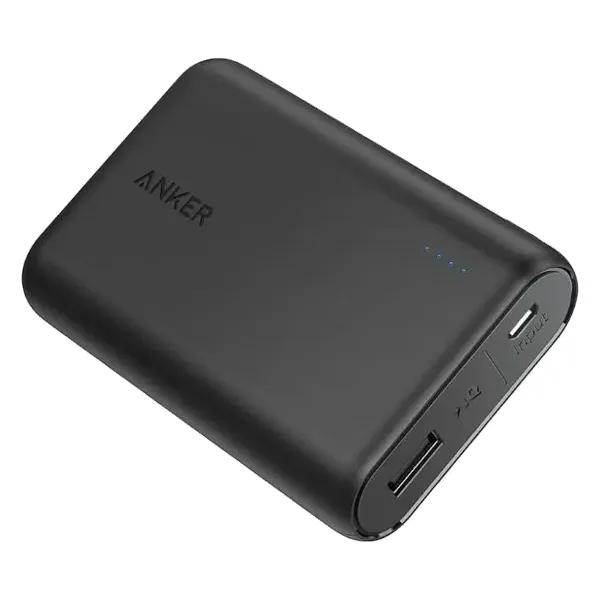
Anker PowerCore 10000 Slim
10,000mAh charges most phones 2-3 times. Slim enough to fit in a jacket pocket. You'll be running Google Maps, Google Translate's camera feature, and Japan's train apps all day. Without a power bank, you'll be searching for convenience store outlets by 4pm. At $26, this is one of the highest-ROI things on this list.
Season-by-Season Packing Guide
🌸 Spring (Mar-May)
- ✓Cherry blossom season (late Mar-early Apr) is peak tourism. Book everything early.
- ✓Light layers - mornings are cold (5-15°C), afternoons warm up
- ✓Compact umbrella. April rain is frequent.
- ✓Comfortable walking shoes - you'll walk for hours in crowds
☀️ Summer (Jun-Aug)
- !Rainy season: June-July. Pack rain jacket or umbrella every day.
- ✓Humidity is brutal in Tokyo and Kyoto. Pack moisture-wicking fabrics.
- ✓Sunscreen (buy at convenience store - Japanese SPF products are excellent)
- ✓Light, breathable layers for aggressive train AC
🍁 Autumn (Sep-Nov)
- ✓Best overall season. Cool, clear, fall foliage in November.
- ✓Light jacket for evenings
- ✓Typhoon season ends in October. September storms possible.
- ✓November is the peak "second season" -- book accommodation early
❄️ Winter (Dec-Feb)
- ✓Cold but uncrowded. Best time for budget travelers.
- ✓Heavy coat, gloves, scarf for outdoor temple visits
- ✓Snow possible in Kyoto and Hokkaido. Waterproof shoes.
- ✓Onsen season -- pack a small washcloth/towel for communal baths
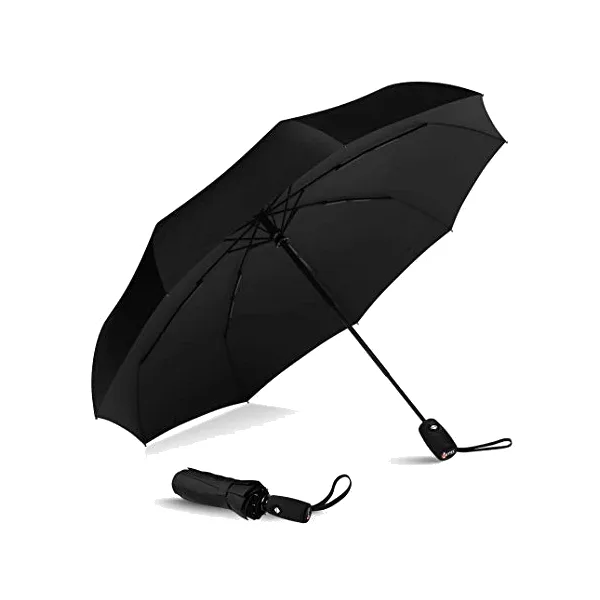
Repel Windproof Travel Umbrella
Japan is a culture that takes umbrellas seriously. You'll see plastic disposable umbrellas for sale at every convenience store for 500-700 yen. Skip the disposable, bring the Repel. Its 9-rib construction handles typhoon-edge winds and it folds to 11" to fit in a daypack side pocket. I've had mine for 4 years and three Japan trips. Still intact.
What to Leave Behind (Japan-Specific)
❌ Don't Bother
- ✕Power adapter - Japan uses Type A. Same as the US. You have it already.
- ✕Lace-up sneakers as your primary shoe - the constant on/off at temples is exhausting
- ✕Too many clothes - convenience stores (combini) sell toiletries, socks, even basic shirts. Restock there.
- ✕Checked roller bag - use a backpack instead, or use Japan's takkyubin luggage forwarding service (¥1,500-2,000) to send bags ahead to your next hotel
- ✕Strong perfume or cologne - traditional onsen culture and enclosed train etiquette frown on strong scents
✅ Don't Forget
- ✓Multiple pairs of good socks - they will be seen at every traditional venue
- ✓Small bag/daypack for day trips - leave your main bag at the coin locker
- ✓Cash - 30,000-50,000 yen for the first few days minimum
- ✓Compact umbrella - year-round essential
- ✓eSIM or know your pocket WiFi plan - without data you're navigating blind
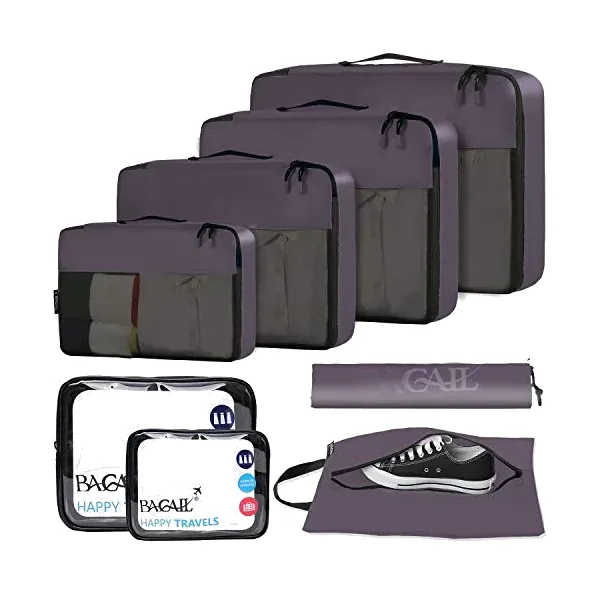
BAGAIL 8-Set Packing Cubes
Japan is a multi-city country. Most travelers hit Tokyo, Kyoto, Osaka, and maybe Hiroshima or Hakone. Moving between cities every 2-3 days means your bag gets opened and repacked constantly. Packing cubes let you pull out the "day 5 hotel" clothes without unpacking everything. They also compress soft items significantly, which matters when you're fitting a week into a 40L backpack.
Check the luggage weight before you leave home
You will buy things in Japan. The country is extraordinary for shopping: stationery, ceramics, matcha everything, Kit Kat flavors, vintage clothing in Tokyo. Budget a quarter of your bag for the return trip, or buy a cheap bag at Daiso (Japan's dollar store chain) to check home. A $10 luggage scale is worth packing just to avoid surprises at Narita on the way home.
FAQs
Do I need a travel adapter for Japan?
No. Japan uses Type A plugs, which are identical to US and Canadian plugs. Standard US chargers work without any adapter. The only exception is appliances that specifically require 120V (some older electric shavers) - Japan runs at 100V, but virtually all modern electronics accept 100-240V.
Is Japan really still a cash society?
Yes, more than anywhere else you've likely traveled recently. Major department stores, 7-Elevens, and hotel restaurants take cards. But small ramen shops, local izakayas, many taxis, shrines, and temple entry fees are cash-only. Withdraw at a 7-Eleven or Japan Post ATM - both reliably accept US debit and credit cards, unlike many Japanese bank ATMs.
What's the deal with shoes at temples?
Most Shinto shrines don't require shoe removal, but many Buddhist temples do - especially when entering traditional buildings or tatami rooms. Ryokans (traditional Japanese inns) always require shoe removal at the entrance. Shoes that slip on and off quickly (loafers, slip-on sneakers) make this effortless. Lace-up boots make you the person everyone is waiting for.
How do I get a Suica card?
At Narita or Haneda airport, look for the JR East Welcome Suica machines near the train gates. You can load it with yen immediately. It works on nearly every train, subway, and bus across Japan, and at most convenience stores. Add it to Apple Wallet or Google Pay if you have a newer phone and you may not need a physical card.
Should I use eSIM or pocket WiFi for Japan?
eSIM is cleaner: buy before you travel, activate on landing, no physical device to carry. Costs $15-25 for 10-30 days. Pocket WiFi gives you unlimited hotspot to share with travel companions, but you have to return it and it's another thing to keep charged. For solo travelers: eSIM. For groups: pocket WiFi.
The Japan Travel Kit
Osprey Farpoint 40 + Anker Power Bank + Repel Umbrella + BAGAIL Packing Cubes. About $180 total. The core kit that handles every Japan-specific challenge.
Related Guides
What to Pack for Europe: The Complete List
Read →Best Travel Backpack 2026
Read → carry-on-only-travel.html" class="group bg-white border border-stone-200 rounded-xl p-4 hover:border-amber-300 hover:shadow-sm transition-all">How to Travel Carry-On Only
Read →