What to Pack for Southeast Asia 2026: Thailand, Vietnam & Bali
🧳 TripLab Testing Standard
The TripLab team traveled through Bangkok, Chiang Mai, Hanoi, Hoi An, and Ubud to build this list. Everything here was tested in 35°C heat and 90% humidity. No paid placements.
⚡ Quick Answer
For a multi-stop Southeast Asia trip, the Osprey Farpoint 40 is the bag that works everywhere. Pack lightweight, moisture-wicking clothes, bring a universal adapter and a power bank, and leave half your wardrobe at home. You can buy almost anything cheaper on the ground than you paid at home.
You land in Bangkok at 11 PM after 20 hours of travel. It is 33°C and thick with humidity even at night. Your roller bag catches on every cracked sidewalk tile. The guesthouse has three flights of narrow stairs. By morning you have already decided you packed wrong. Here at TripLab, we have been there and built this guide so you do not have to learn it the hard way.
Why Southeast Asia Packing Is Different
Southeast Asia breaks every assumption that works for Europe or the US. The heat is not just warm, it is genuinely oppressive from May through October across most of Thailand and Vietnam. Bali runs hot year-round. That changes everything about fabric choices, footwear, and how much stuff is too much.
The second big difference is how you move. Multi-stop itineraries through Bangkok, Chiang Mai, Hoi An, Ubud, and back require a bag that handles cobblestones, motorbike taxis, and overhead compartments on budget airlines like AirAsia and VietJet. Rolling luggage with four spinner wheels becomes a liability the moment you leave the airport.
The third factor: you can buy almost anything in Southeast Asia for less than you paid at home. Sunscreen, toiletries, extra clothing, sandals, sarongs all cost a fraction of Western prices in local markets. That should change how you pack. If you are unsure about something, leave it. Buy it there if you need it.
The Right Bag for Southeast Asia
Travel backpacks beat rolling luggage for multi-destination Southeast Asia travel. The reasoning is practical: guesthouse stairs, packed night buses, motorbike taxi racks, sand, and rain. A bag you can carry on your back and set down in any condition beats a spinner that catches on every surface.
The 40-liter sweet spot works for trips from one week to three months when you pack smart. The Osprey Farpoint 40 (men's) and Osprey Fairview 40 (women's) are the TripLab team's top picks for Southeast Asia specifically because the harness system tucks away completely for overhead bins on AirAsia, VietJet, and Scoot. That matters because you will be on multiple budget carriers.
If you are doing a single resort-focused trip to Bali, a carry-on spinner works fine. Hotels at that tier have elevators and luggage service. But for anything involving overnight buses, hostels, or island-hopping, the backpack wins.
💡 TripLab Tip: The 40L Rule
A 40-liter pack qualifies as a carry-on on most Southeast Asian budget carriers, including AirAsia and Scoot. Check your specific route before flying. Buying a seat bundle that includes carry-on allowance is almost always cheaper than paying excess baggage at the gate.
Clothing: Less Is Genuinely More
The biggest packing mistake in Southeast Asia is bringing too many clothes. You will sweat through a shirt in two hours of sightseeing. You will want fresh options every day. The solution is not to pack more clothing, it is to pack fabrics that dry overnight and find a laundry service by day three.
Laundry services in Bangkok, Hoi An, and Ubud cost between one and three USD per kilo. You drop a bag, pick it up the next morning, and your whole wardrobe is clean. Most travelers do this every three to four days. Pack five days of clothes maximum.
What works: quick-dry shirts in light colors (dark colors trap heat), one pair of lightweight pants that doubles as temple-appropriate, one pair of shorts, one dress or linen trousers for evenings, flip flops plus one pair of walking shoes. That is the list. Everything else is weight you carry for no reason.
What does not work: jeans (heavy, slow-drying, suffocating in heat), multiple pairs of shoes (you will wear two pairs total), anything you would be heartbroken to lose or damage.
⚠️ Temple Dress Code Warning
Temples across Thailand, Vietnam, and Bali require shoulders and knees covered. Wat Pho and Wat Phra Kaew in Bangkok are strict and enforce this at the door. Pack at least one outfit that covers both. A lightweight sarong or linen pants and a loose shirt solves this for every temple on your itinerary.
The Non-Negotiable Tech Gear
Southeast Asia is a charging nightmare if you are not prepared. Power outlets are inconsistent, voltage is 220V everywhere, and the combination of constant AC, phone navigation, and camera use drains batteries faster than you expect.
Three pieces of tech earn their space in every bag heading to the region. A universal adapter handles the mix of plug types you will encounter across Thailand, Vietnam, and Bali. The Paewok universal travel adapter covers every outlet type across all three countries and charges two USB devices simultaneously. A portable power bank for days when you are out all day: the Anker PowerCore 10000 is TSA-compliant at 10,000mAh and fits in a pocket. Noise-canceling headphones for the overnight buses and budget flights: the Sony WH-1000XM5 makes a 10-hour Hanoi to Ho Chi Minh City bus survivable.
Packing Organization: Do Not Skip This
A 40-liter backpack without organization becomes a black hole. You cannot find anything, clean clothes touch dirty ones, and repacking at every guesthouse takes 20 minutes. BAGAIL packing cubes solve all three problems. One cube for shirts, one for bottoms, one for electronics, a small one for socks and underwear. The compression version flattens thick items. TripLab team members use these on every trip.
For toiletries, Southeast Asia heat means your toiletry bag will be more active than usual. Sunscreen, insect repellent, and an antifungal powder all earn spots in the daily rotation. The Gonex hanging toiletry bag is practical in shared bathrooms and hostels where counter space is nonexistent. Hook it to a towel rail or shower curtain rod and everything is accessible.
Footwear: Two Pairs Maximum
Every Southeast Asia veteran will tell you the same thing: bring two pairs of footwear and buy sandals on the ground. The Hoka Clifton 9 is the TripLab team's pick for a walking shoe that handles temple circuits, night markets, and 15,000-step days without destroying your feet. Pair it with Sockwell compression socks for longer days and flights, where the combination of heat and long standing periods causes noticeable swelling by evening.
Flip flops or cheap sandals: buy them in Bangkok or Ubud for two to four USD. You will likely trash them on a motorbike ride or leave them at a beach anyway. Do not pack a nice pair from home.
Rain Gear: Skip the Big Umbrella
Monsoon season runs from May through October across most of the region. That does not mean rain all day. It means brief, intense downpours in the afternoon and evening. A compact travel umbrella handles this perfectly and fits in a side pocket. The Repel windproof travel umbrella has survived the TripLab team's testing in Ubud and Hoi An, where the rain comes sideways. It opens with one hand, dries in seconds, and fits in any bag pocket.
Skip a dedicated rain jacket unless you plan to be in mountainous northern Vietnam or Chiang Mai in high season. The heat makes wearing a rain jacket more uncomfortable than the rain itself.
What to Leave at Home
Three categories of things you do not need to bring to Southeast Asia. First, hair dryers and styling tools. Every guesthouse and hotel provides a hair dryer, and the humidity undoes any styling within five minutes of stepping outside. Second, multiple guidebooks. All the information you need is on your phone. One good app beats three kilos of paper. Third, anything expensive you would be upset to lose. Markets are chaotic, bags get left on buses, and petty theft exists. Leave the good jewelry, the rare sunglasses, and the expensive camera accessories at home or in your accommodation's safe.
Southeast Asia Packing Comparison by Destination
| Destination | Best Bag Type | Key Extras | Voltage |
|---|---|---|---|
| Thailand | Backpack 40L | Temple scarf, bug spray | 220V |
| Vietnam | Backpack 40L | E-visa, rain jacket (north) | 220V |
| Bali | Backpack or carry-on | Sarong, reef-safe sunscreen | 220V |
| Cambodia | Backpack 40L | USD cash, neutral clothes | 230V |
TripLab's Top Picks for Southeast Asia
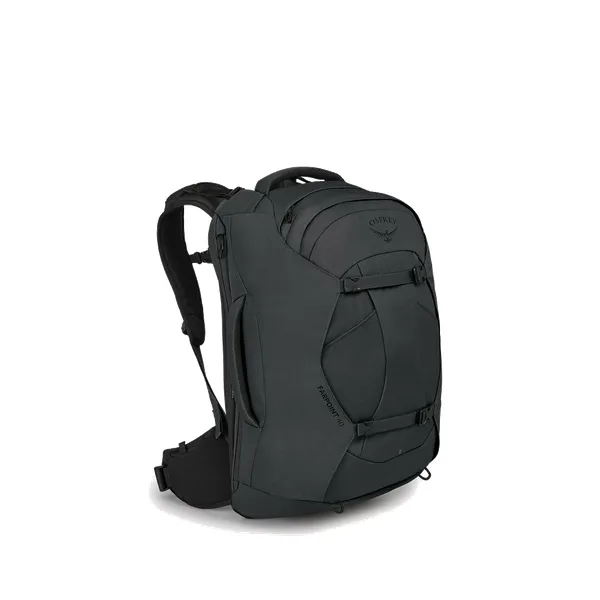
Osprey Farpoint 40, ~$175
The gold standard for Southeast Asia travel. Panel-loading design with a lockable zipper, stowable hip belt, and harness that disappears for budget airline overhead bins. The TripLab team used this on five-country trips without a single issue.
- ✓40L fits carry-on limits on AirAsia and Scoot
- ✓Lockable zipper on main compartment
- ✓Stowaway harness and hip belt
- ✓Lifetime Osprey warranty
- ✗No built-in rain cover
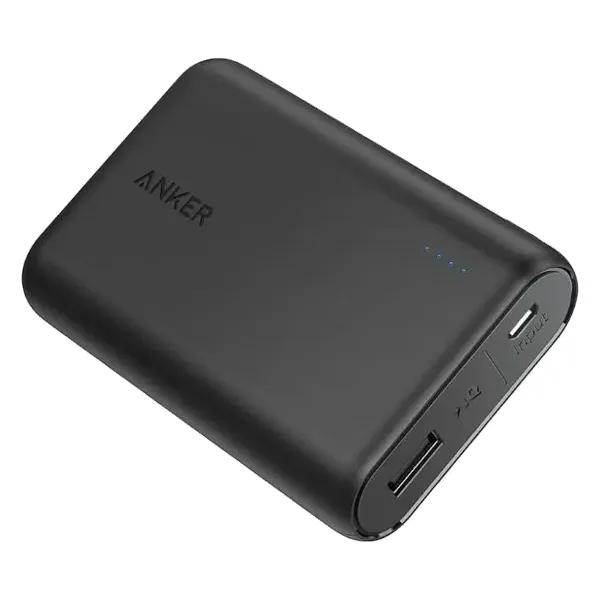
Anker PowerCore 10000, ~$26
10,000mAh in a palm-sized package. TSA-approved, two-device charging, and fast enough to get your phone from 0 to 80% before your taxi arrives. The reliable backup when temple circuits, night markets, and navigation drain your battery.
- ✓10,000mAh, 2+ full iPhone charges
- ✓TSA-approved carry-on
- ✓Two USB-A output ports
- ✓Fits in any pocket
- ✗No USB-C output port
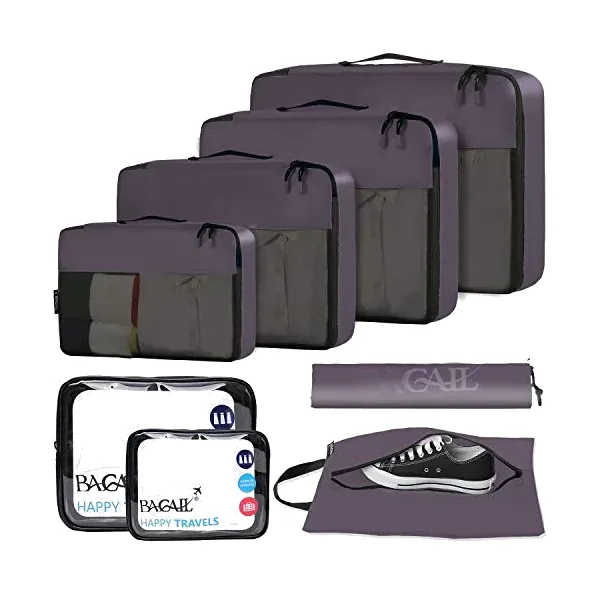
BAGAIL Packing Cubes, ~$19
Six cubes in multiple sizes. Compression version available. For a 40L backpack moving between five countries over three weeks, packing cubes are not optional, they are how you find anything. TripLab recommends one cube per category rather than per day.
- ✓Six cubes in three sizes
- ✓Compression version available
- ✓Double zipper, mesh top panel
- ✓Multiple color options to identify quickly
- ✗Not waterproof
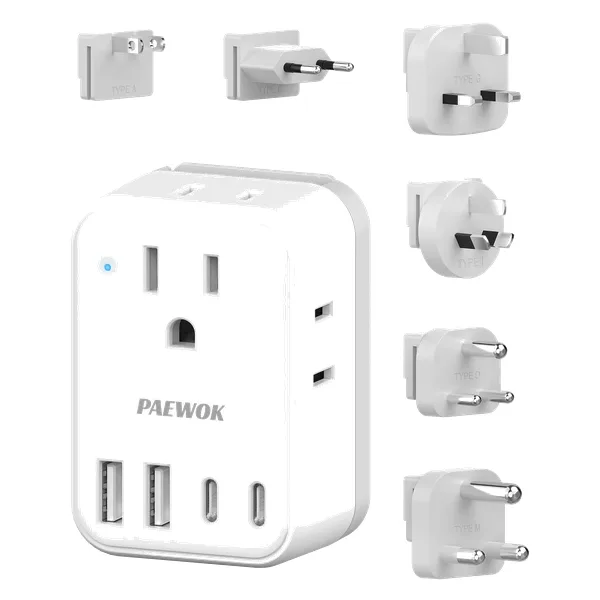
Paewok Universal Travel Adapter, ~$23
One adapter covers Thailand (Type A and B), Vietnam (Type A, B, and C), and Bali (Type C and F). USB-A and USB-C ports built in so you do not have to hunt for two outlets. Compact enough to leave plugged in without blocking the second outlet.
- ✓Covers 150+ countries
- ✓USB-A and USB-C charging ports
- ✓Compact, no protruding parts
- ✓Works on 220V systems
- ✗Not a voltage converter
Osprey Farpoint 40, The SE Asia Bag
One bag. Every bus, budget flight, and guesthouse staircase. Works everywhere from Bangkok to Bali.
Check Price on Amazon →Frequently Asked Questions
Do I need a visa for Thailand, Vietnam, or Bali?
US passport holders get 30 days visa-free in Thailand, 45 days visa-free in Indonesia (Bali), and Vietnam requires a valid visa or e-visa. Apply for the Vietnam e-visa at least 3 business days before departure at the official government portal. Rules change, so verify your specific passport before travel.
What adapter do I need for Southeast Asia?
Southeast Asia uses a mix of plug types: Thailand and Vietnam use Type A, B, and C outlets; Bali uses Type C and F. The Paewok universal adapter covers all of them. Voltage is 220V across the region, but most modern electronics are dual-voltage and work fine without a converter.
Should I bring a backpack or rolling luggage to Southeast Asia?
For multi-destination trips hopping between Bangkok, Chiang Mai, Hoi An, and Bali, a travel backpack like the Osprey Farpoint 40 beats rolling luggage. Many guesthouses have steps, streets are uneven, and you will end up on motorbike taxis. For resort-only Bali trips, a carry-on spinner works fine.
How much cash do I need for Southeast Asia?
Budget 30-50 USD per day for Thailand and Vietnam as a baseline, including accommodation, food, and transport. Bali runs slightly higher at 50-80 USD per day. ATMs are widely available in cities. Carry some small bills in local currency for markets, tuk-tuks, and temple entrance fees that are cash-only.
What clothing is appropriate for temple visits in Southeast Asia?
Temples across Thailand, Vietnam, and Bali require shoulders and knees covered. Women need to cover their hair in some Balinese temples. A lightweight sarong or linen pants and a loose shirt is the practical answer. Many temple entrances rent or lend sarongs if you forget, but having your own is better.