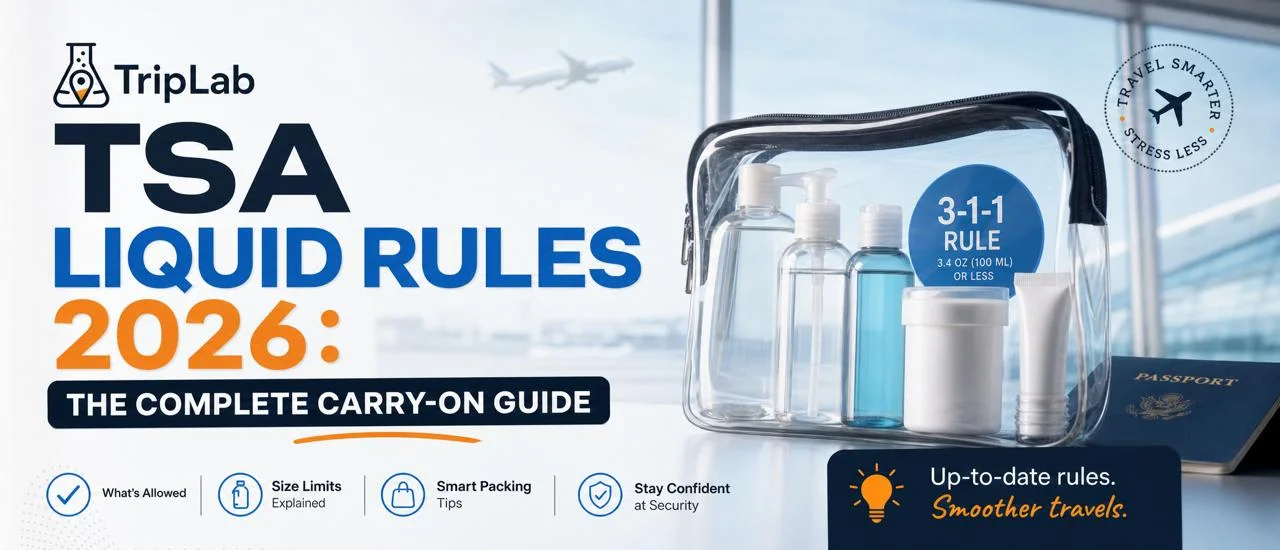
TSA Liquid Rules 2026: The Complete Carry-On Guide
🧳 TripLab Testing Standard
The TripLab team has passed through TSA checkpoints hundreds of times. This guide covers the real rules, the common gotchas, and the gear that makes security faster. No fluff. No paid placements.
⚡ Quick Answer
The TSA 3-1-1 rule remains in effect in 2026: liquids in containers of 3.4 oz (100ml) or less, packed in one clear quart-sized zip-top bag, one bag per passenger. Medications, baby formula, and breast milk are exempt. TSA PreCheck does not remove the liquid rule but does let you keep the quart bag inside your carry-on. Pack toiletries in the BAGAIL 8-Set Packing Cubes set for easy extraction at the checkpoint.
The TSA liquid rule has been in place since 2006, yet the TripLab team still sees travelers lose full-size shampoo bottles, jars of Nutella, and expensive cologne at the checkpoint every single trip. This guide covers everything you need to know to get through security without losing a single item.
The 3-1-1 Rule Explained
The 3-1-1 rule is straightforward, but each number has a specific meaning that travelers routinely misunderstand:
- 33.4 ounces (100ml) or less per container. The rule is about the container size, not how full it is. A 6 oz shampoo bottle that is half empty is still a 6 oz container and will be confiscated.
- 11 clear, quart-sized, zip-top bag. Any see-through zip bag approximately 7 x 8 inches qualifies. Gallon bags are not permitted; neither are opaque bags. The bag must actually close.
- 11 bag per passenger. Each person in your travel group gets one quart bag. Families of four can bring four bags total, one per person, including children.
The quart bag must be removed from your carry-on and placed separately in the bin in standard TSA lanes. In TSA PreCheck lanes, you keep the bag inside your carry-on. This is one of the practical time-savers of PreCheck for frequent travelers.
What Counts as a Liquid Under TSA Rules?
The TSA defines liquids broadly as liquids, gels, aerosols, creams, and pastes. This catches many travelers off guard because the category includes things that do not feel like liquids in everyday experience.
Obvious Liquids (Subject to 3-1-1)
- ✗ Water, juice, coffee
- ✗ Shampoo and conditioner
- ✗ Perfume and cologne
- ✗ Liquid foundation and mascara
- ✗ Contact lens solution
- ✗ Liquid medication (with exception)
Surprise Liquids (Many Travelers Miss These)
- ✗ Peanut butter, Nutella, hummus
- ✗ Yogurt and pudding
- ✗ Salsa, jam, and spreadable cheese
- ✗ Toothpaste and lip gloss
- ✗ Gel shoe insoles
- ✗ Spray sunscreen and aerosol deodorant
The rule of thumb the TripLab team uses: if it can be poured, squeezed, pumped, or spread, it is a liquid under TSA rules. When in doubt, check the TSA website or pack it in your checked bag.
TSA Liquid Exceptions: What You CAN Bring Over 3.4 oz
Several categories are explicitly exempt from the 3.4 oz limit. These must be declared to the TSA officer at the checkpoint and may go through additional screening.
Medications
Prescription and over-the-counter liquid medications are exempt from the 3.4 oz limit in reasonable quantities. Keep medications in their original pharmacy-labeled containers when possible. Carry a copy of the prescription or a doctor's note for quantities that might appear unusually large.
Liquid medications must be declared separately at the checkpoint. TSA officers will screen them using liquid-testing equipment and may swab the containers for explosive residue testing. This is routine and not cause for concern.
Baby Formula and Breast Milk
Baby formula, breast milk, toddler drinks, and juice for infants are exempt from the 3-1-1 rule in reasonable quantities. You do not need a baby present to bring breast milk through security. Notify the TSA officer at the checkpoint that you are carrying these items.
Ice packs and gel packs used to keep breast milk cold are also exempt from the 3.4 oz rule when used for this purpose, even if they are partially frozen or slushy.
Duty-Free Liquids Purchased After Security
Liquids purchased at airport duty-free shops after clearing security are allowed in carry-on bags regardless of size. The catch: they must remain in the sealed, tamper-evident bag provided by the retailer for the duration of the flight. If you break the seal, the item may be confiscated at connecting flight security checkpoints, particularly on international connections through airports with stricter rules.
Other Exceptions
- ✓Saline solution: Exempt from the 3-1-1 rule in reasonable quantities. Declare at the checkpoint.
- ✓Liquid nutrition supplements: Protein shakes and medical nutritional supplements are generally exempt. Declare them.
- ✓Snow globes under 3.4 oz: Small snow globes that fit in the quart bag are allowed. Large ones are not, regardless of the liquid volume inside.
International Airports: Stricter Rules Than US Domestic
The TSA 3-1-1 rule applies to US domestic and international departures from US airports. Once you travel internationally, security rules vary by country, and some are stricter than the US standard.
| Region | Liquid Rule | Notes |
|---|---|---|
| USA (TSA) | 3.4 oz / 100ml per container, 1 quart bag | PreCheck: bag stays in carry-on |
| European Union | 100ml per container, 1L clear bag | Nearly identical to TSA 3-1-1 |
| UK | 100ml per container, 1L clear bag | Post-Brexit, same as EU for now |
| Australia | 100ml per container, 1L clear bag | Matches international standard |
| Some Middle East Hubs | 100ml per container, stricter screening | May also restrict duty-free liquids on connections |
The TripLab team recommends checking the specific airport authority's website for any connecting flights. Duty-free liquids purchased in the US can be confiscated at connecting security points in some countries if the security seal is damaged, so keep the sealed bag intact.
Solid Alternatives: Skip the 3-1-1 Entirely
The cleanest solution to TSA liquid rules is to reduce or eliminate the liquids you pack altogether. The market for solid-format personal care products has expanded dramatically, and the quality now rivals their liquid counterparts.
Replace These Liquids
- →Shampoo: Solid shampoo bar (Lush, HiBar, Ethique)
- →Conditioner: Solid conditioner bar
- →Body wash: Bar soap or solid body wash bar
- →Deodorant: Solid stick deodorant (not gel or roll-on)
- →Toothpaste: Toothpaste tablets (Bite, Huppy, DentTabs)
- →Sunscreen: Solid sunscreen stick
What Still Needs the 3-1-1 Bag
- →Contact lens solution (no solid alternative)
- →Liquid foundation and skincare serums
- →Perfume (unless using solid perfume)
- →Liquid medication
- →Eye drops
The TripLab team tested a fully solid toiletry kit on a 10-day carry-on-only trip and fit everything into a single small packing cube from the BAGAIL 8-Set Packing Cubes set, with no quart bag needed. It simplified security to a remarkable degree.
6 Tips to Get Through TSA Security Faster
Beyond liquid compliance, there are practical steps that meaningfully speed up security. The TripLab team uses all of these consistently.
- 1.Use a dedicated toiletry packing cube. Pack all liquids in one clearly labeled cube from your BAGAIL 8-Set Packing Cubes. At the checkpoint, pull out just that cube plus your quart bag. No digging through the whole bag.
- 2.Wear or pack your laptop separately. Laptops must come out in standard lanes (not PreCheck). Place yours in an easy-access sleeve at the top of your bag, not buried under clothes.
- 3.Wear slip-on shoes. Shoes must be removed in standard lanes. A minute spent unlacing boots at the bin is a minute the line behind you is watching impatiently.
- 4.Keep a power bank accessible, not buried. The Anker PowerCore 10000 is allowed in carry-on (not checked bags) but may be flagged for additional screening if buried in a bag. Keep it in an outer pocket for easy access.
- 5.Empty your pockets before queuing. Put keys, coins, and your phone in your bag before you reach the bin area, not at the conveyor belt.
- 6.Apply for TSA PreCheck or Global Entry. PreCheck costs $78 for 5 years, keeps shoes on, electronics in your bag, and your quart bag in your carry-on. It pays for itself on the second trip.
What Happens When TSA Flags a Liquid?
If a liquid or gel triggers additional screening, TSA agents have a few options. They may swab the container for explosives, use a liquid-testing machine, or ask you to open the container. This process typically adds 2 to 5 minutes.
If the item is over 3.4 oz and is not in an exempt category, the officer will ask you to choose: surrender the item, return to check-in to put it in your checked bag, or mail it to yourself. In practice, at most airports there is no option to mail items, and returning to check-in for a $12 bottle of face wash is not worth the time. The TripLab team's advice: transfer liquids to travel-size containers before you leave home and avoid the checkpoint stress entirely.
A portable door lock like the Addalock Portable Door Lock and a Door Stop Alarm are security items that go through the checkpoint without any issues since they are solid, non-liquid items. If you travel with personal safety gear, these are both carry-on friendly.
The TripLab Recommended Carry-On Liquid Setup
Gear That Makes Security Painless
- ✓Packing cubes for organization: BAGAIL 8-Set Packing Cubes keep toiletries, electronics, and clothing in separate easy-to-find cubes. The small cube is perfect for the quart bag and travel-size liquids.
- ✓Power bank in outer pocket: Anker PowerCore 10000 is compact enough to slip into a jacket pocket or outer bag pocket for easy declaration at security if needed.
- ✓Travel adapter, not a risk: The Paewok Universal Travel Adapter is 100% carry-on safe as a solid electronic device. No liquid concerns, no restrictions.
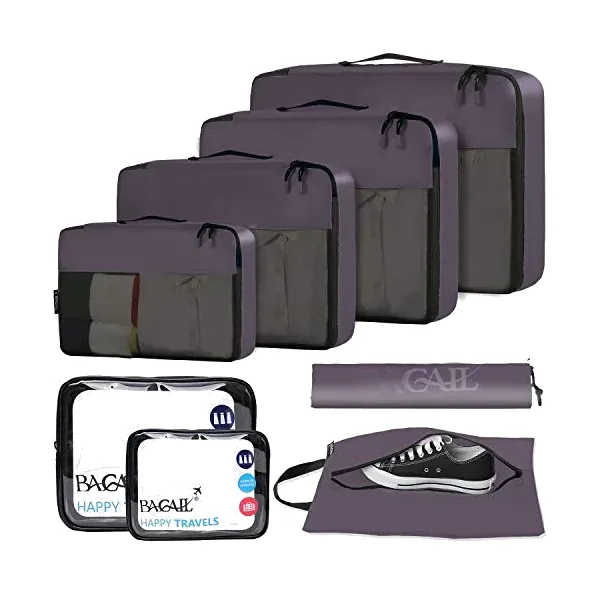
BAGAIL 8-Set Packing Cubes - ~$30
Eight cubes in four sizes make it easy to dedicate one small cube to your quart bag and travel toiletries. Pull out one cube at security instead of unpacking the whole bag.
- ✓8 cubes in 4 sizes for every category
- ✓Mesh lids for quick visual ID at checkpoint
- ✓Lightweight, machine washable
- ✓Works with any carry-on bag
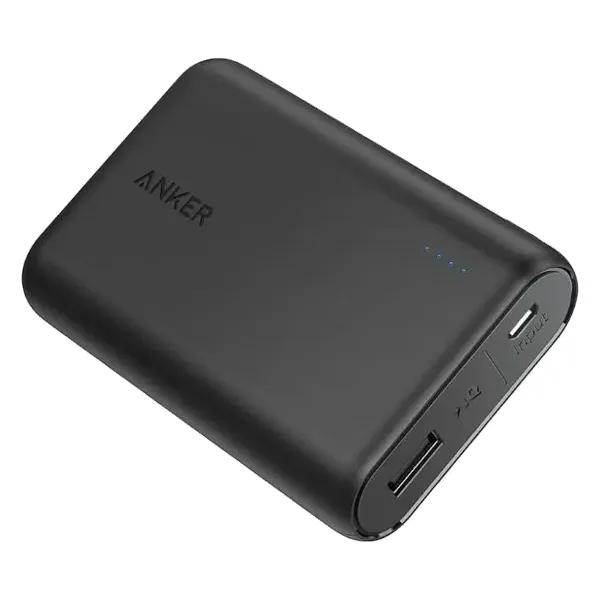
Anker PowerCore 10000 - ~$26
The most carry-on-friendly power bank at its capacity. Compact, under FAA limits at 36Wh, and fits in any jacket pocket for easy extraction at security.
- ✓10,000 mAh capacity, 36Wh (well under FAA 100Wh limit)
- ✓Carry-on only (no checked bags for power banks)
- ✓Compact size, fits in a pocket
- ✓Charges two devices simultaneously
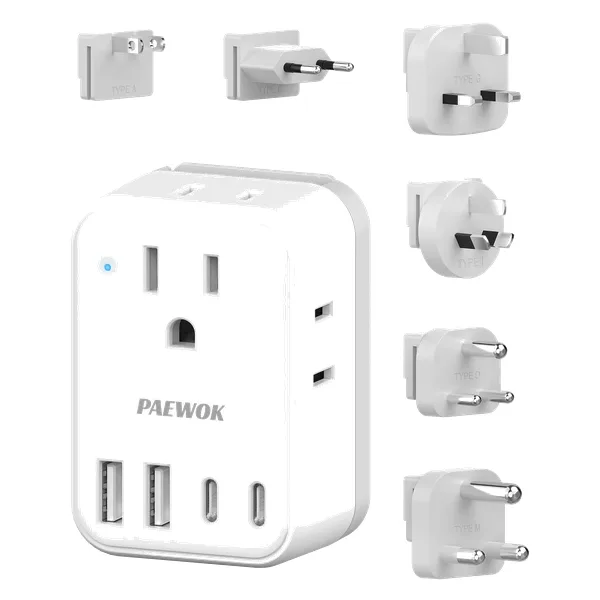
Paewok Universal Travel Adapter - ~$25
A solid electronic device with zero TSA issues. The Paewok adapter covers outlets in 150+ countries and includes USB-A and USB-C ports. It is 100% carry-on safe, requires no declaration at security, and fits easily in an outer bag pocket for quick access. The TripLab team has used this on trips across Europe, Asia, and South America without a single issue.
- ✓Works in 150+ countries, all outlet types
- ✓USB-A and USB-C ports included
- ✓100% carry-on safe, no TSA restrictions
- ✓Compact, fits in any outer pocket
Sail Through Security Every Time
The right packing system means less stress at the checkpoint. BAGAIL 8-Set Packing Cubes keep your liquids organized and accessible in under 10 seconds.
Check Price on Amazon →Frequently Asked Questions
What is the TSA 3-1-1 liquid rule?
The 3-1-1 rule means: liquids must be in containers of 3.4 oz (100ml) or less, all containers must fit in 1 clear quart-sized zip-top bag, and each passenger is allowed 1 such bag. This applies to all liquids, gels, aerosols, creams, and pastes in carry-on bags.
Does the TSA 3-1-1 rule still apply in 2026?
Yes. The TSA 3-1-1 rule remains in effect in 2026. There are no planned changes to the liquid restriction for standard security lanes. TSA PreCheck does not exempt you from the 3-1-1 rule.
Are medications exempt from TSA liquid rules?
Yes. Prescription and over-the-counter medications in liquid form are exempt from the 3.4 oz limit. They must be declared at the checkpoint and may be subject to additional screening. Keep medications in their original labeled containers when possible.
Can I bring a full-size shampoo in my carry-on?
No. Any liquid container larger than 3.4 oz (100ml) is not permitted in carry-on bags, even if it is not full. The rule applies to the container size, not the amount inside. Transfer to a travel-size container or switch to a solid shampoo bar.
What are solid alternatives to liquid toiletries?
Solid shampoo bars, conditioner bars, solid deodorant, solid sunscreen sticks, toothpaste tablets, and solid moisturizer bars are all TSA-friendly and do not count toward the 3-1-1 limit. They are also more sustainable and last longer than liquid equivalents.
Does peanut butter count as a liquid under TSA rules?
Yes. Peanut butter, Nutella, hummus, and other spreadable foods fall under the TSA gel and paste category. They are subject to the 3.4 oz limit in carry-on bags. A full-size jar will be confiscated at the checkpoint.
Can I bring wine or alcohol through TSA security?
In containers of 3.4 oz or less, yes. Mini bottles (50ml) are allowed in your quart bag. Full bottles of wine or spirits are not allowed in carry-on bags unless purchased at a duty-free shop after clearing security, in which case they must stay in the sealed tamper-evident bag.
Does TSA PreCheck speed up the liquid check?
TSA PreCheck does not exempt you from the 3-1-1 rule, but you do not have to remove your quart bag from your carry-on in PreCheck lanes. This saves time versus standard lanes where you must pull out the bag and place it separately in the bin. Using BAGAIL 8-Set Packing Cubes makes finding your liquids fast in either lane.
Can I bring baby formula through TSA in larger amounts?
Yes. Baby formula, breast milk, and toddler drinks are exempt from the 3.4 oz limit. You may bring a reasonable quantity. Inform the TSA officer at the checkpoint and the containers may be tested using liquid scanners.
What is the best quart bag for TSA?
Any clear, zip-top bag that is approximately 1 quart (7 x 8 inches) in size works. Reusable silicone bags or dedicated TSA toiletry bags are more durable than disposable zip-lock bags and are worth having if you travel frequently.